
Museo Nacional del Prado
Museo Nacional del Prado is one of the most well-known museums in the world and it is widely considered to have one of the world’s finest collections of European art, dating from the XII century to the early XX century and the single best collection of Spanish art. I also think it should be a crime to visit Madrid and not visit this place. So, as I mentioned in the previous post, I got myself a free ticket and promptly at 6:30pm entered the “hidden” entrance back of the main building. I say “hidden” because the large main staircase above the ticket office is only used for special occasions and the actual entrance is a modern addition in the back. The original building dates to Carlos III who commissioned it back in 1785, as part of major public works throughout the country.
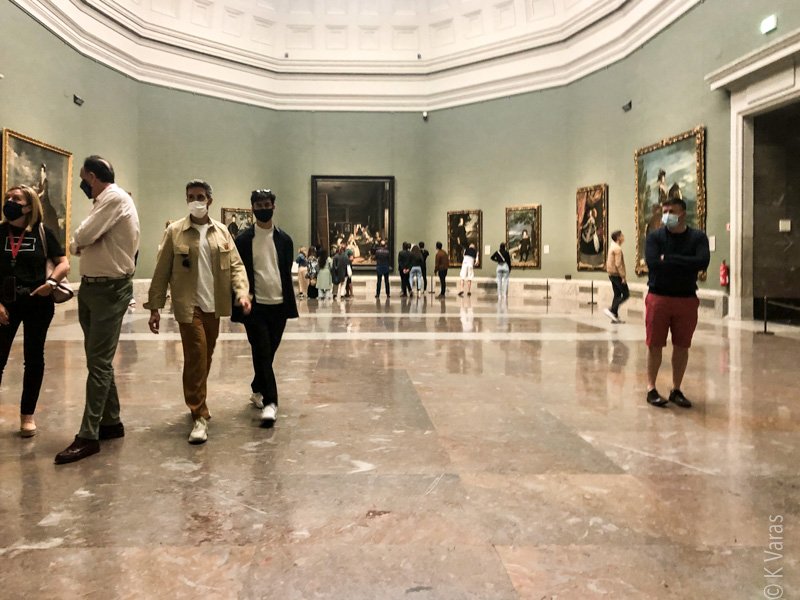
Knowing that it is pretty much impossible to see everything here in the short two hours I had, I wanted to make sure to get a good look at Las Meninas first. Las Meninas, of course, is the most famous work of Diego Velázquez, painted in 1656, and the museum’s greatest draw. This means that it has a very prominent spot in a large round-ish room and normally that room is very full of people. This being a pandemic, the numbers were smaller than usual but it was still way busier than all other such rooms in other museums (with the exception of the Impressionists exhibit at the Thyssen-Bornemisza, but I digress). I did get quite close to the painting, fortunately, but as soon as I got my phone ready for a picture I was very sternly cautioned against it, and shooed away. To say I was disappointed would be an understatement though I did try to get a sneak photo of it anyway. This is as close as I could get with a camera, sorry:
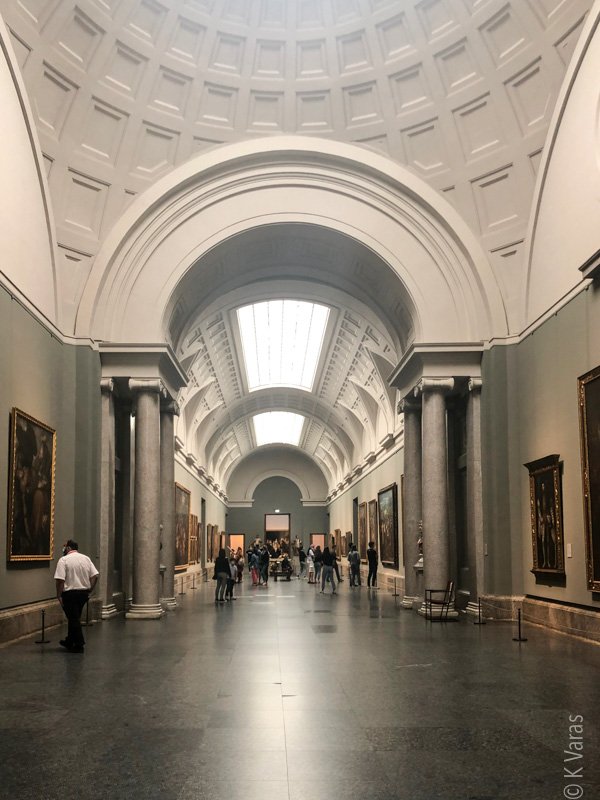
After Las Meninas, I took my time checking out all the major works along the main hall, trying to be very careful about taking pictures. I felt like I was being very naughty but, at the same time, I really, really wanted to have some pictures. What impressed me most about the majority of the works on display was their sheer size. So many of the Tizianos, Rubenses, El Grecos, Goyas, and Velázquezes, among others, were absolutely massive, making many of the characters in them life-size. They were breathtaking. Like a thief I took as many photos as I possibly could, occasionally feigning ignorance of rules whenever I got caught.
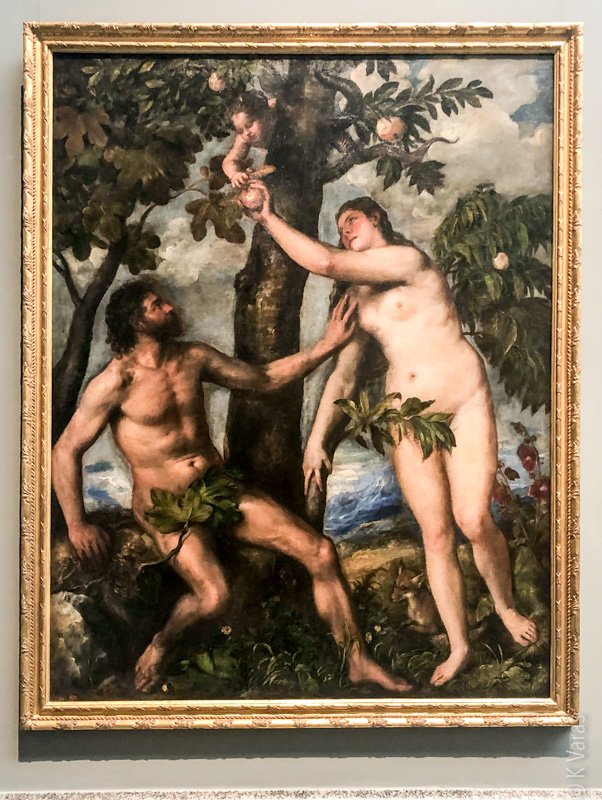
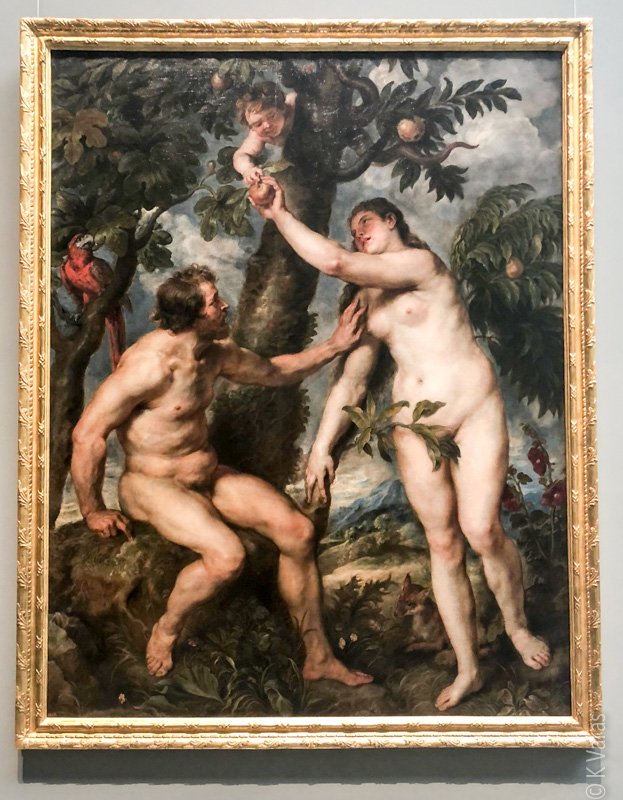
There are a couple of paintings hanging next to each other that caught my attention early on: Tiziano’s Adam & Eve, painted in 1550, and Rubens’s Adam & Eve from 1629 which is very much a copy of Tiziano’s work. The interesting part in all this is that Tiziano’s painting was based on Rafael’s fresco version in the Vatican. We all know that imitation is the greatest form of flattery so it’s not surprising even the great masters of centuries past borrowed heavily from their predecessors.
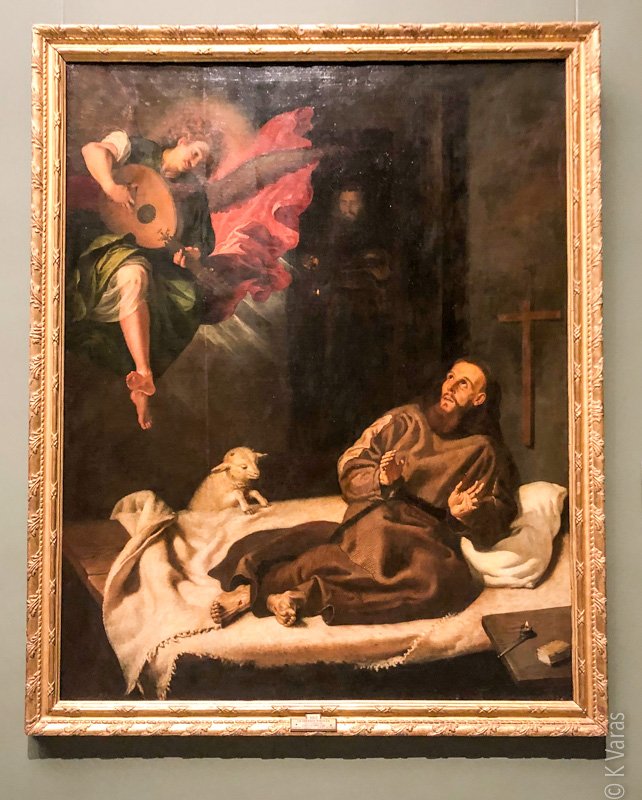
There was another painting that caught my eye, one that I saw at the Museu de Belles Arts in Valencia, Saint Francis comforted by an Angel by Francisco Ribalta. I was actually quite proud of myself for recognizing it (remembering and recognizing paintings and artists is a skill I’m still working on) but it was the little lamb that I remembered more than anything. In this case, however, I am still not 100% sure which one of the two paintings is the original or perhaps there is only one and it’s been moved from Valencia to Madrid in the last few months, but when I look at the photos I have of both, they have different frames and I can see tiny differences so, clearly, one of them is a copy, but a copy in the sense that Ribalta painted two paintings. I think. It is a mystery and the Museu de Belles Arts website is not helping out much by having a broken link and a crappy search function. If I ever figure it out, I shall let you know.
I wandered around as long as I possibly could, the museum being emptier and emptier as time went on. I must have been one of the last people to vacate the building, to the chagrin of the security people who, I am sure, wanted all of us to leave already. But it is hard to leave a place that contains so much history and so much beauty, even if some of it is rather graphic and violent. I love it that I am becoming more and more familiar with the artworks at the various museums, and I can finally appreciate why people go back time and time again. You can be certain that the next time I’m in Madrid I will once again make a visit to any or all of the three grand museums, including the Prado, and I will love it again. And, perhaps if I get lucky, my camera will at last capture Las Meninas in all their glory.
[Best_Wordpress_Gallery id=”426″ gal_title=”Museo Nacional del Prado”]