
Las Fallas 2021
Before you get all excited, no, I did not get to enjoy Las Fallas in València on March 19, 2021. Why not? you ask… Hmm, that horrible plague that still has the world in its deathly grasp has managed to foil my plans to see and maybe even participate in this city’s greatest party. First a bus brought me here a day late and now this. I know I have mentioned Fallas before but this post is dedicated solely to the very little I know about them. Sorry. But here it goes, a little background on what I didn’t get to do (and if I’m repeating anything do let me know … my memory is going and all that…).
Las Fallas (or Falles in Valenciá) is València’s largest and most famous festival, and while its true origins are in some doubt, there are a few theories floating around. One suggests that it comes from a centuries-old Valencian tradition of the city’s carpenters burning leftover materials they no longer needed on the day before the day of St Joseph, the patron saint of carpenters. Another one claims it has to do with the time of year, i.e. close to the equinox and celebrating the coming spring. Yet another stems from an old European tradition in which dolls or figures representing unwelcome or unliked people being hung from balconies and later burned. The latter theory certainly would go a long way to explain the satirical nature of the festival as it exists today. The truth is probably a combination of all three theories. In any case, the Fallas go back to at least the second half of XVIII century when laws were brought in to set some rules about the festival. I’m sure the burning was going on long before then; we all know it can take governments a very long time to realize some controls to protect the public or property are necessary.
The term fallas has its roots in the word for ‘torch’, but over the years it has come be be associated specifically with a fire that was lit to burn ninots, those satirical puppets or dolls representing famous and infamous personages. In the end the figures (or, more accurately, collections of figures) themselves have become known as fallas.
Every year (when there isn’t a pandemic on) hundreds of thousands of people descend on this relatively quiet city, drawn to the festival like moths to a flame. The festival lasts five days, March 15 to 19, though festivities start a couple of weeks earlier. València may be considered a relatively quiet city but these people LOVE their firecrackers and fireworks (ah, the smell of gunpowder in the morning) and the local government does everything in their power to provide a lot of noise daily leading up to the festival itself. Every day, at 2pm from March 1st on, you can witness the mascletà, a thunderous firecracker show, at the Plaça de l’Ajuntament and incredible fireworks displays every night during the festival.
When the Fallas proper start on March 15th, many roads are cut off to traffic so that the enormous ninots can be set up in different parts of the city. This is called La Plantà (or The Placing). These ninots are huge and usually extremely lifelike creatures, depicting bawdy or satirical scenes and current events. Often they are combined or grouped to offer a multi-faceted story of each falla. Over the next few days people have an opportunity to visit each site and admire the handiwork of the various casas falleras, or each neighbourhood’s fallas masters whose creations they are. Each year one of the ninots is saved from destruction by popular vote and those end up in the Fallas Museum, a place I’ve yet to visit. Of course the destruction of the fallas is the best part of the whole festival and it happens on March 19th, known as La Cremà (or The Burning). This day is also the biggest party of them all and if you live in Ciutat Vella, it is pretty much guaranteed you do not sleep a wink at night.
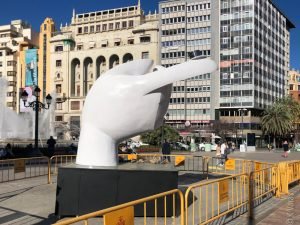
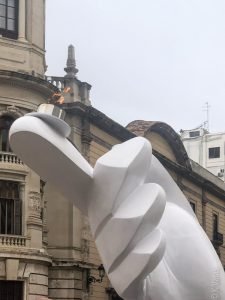
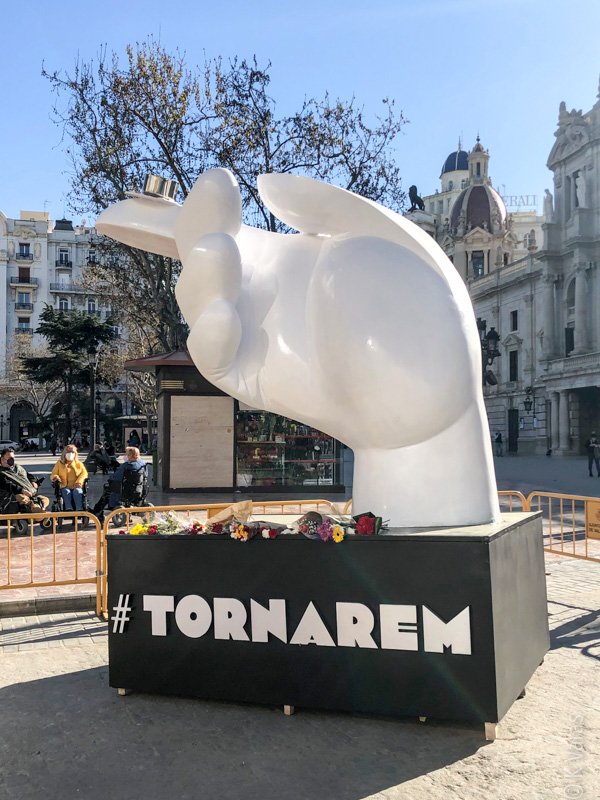
If you secretly harbour pyrotechnic urges, I urge you to move here and become a fallero or fallera, you won’t regret it. In the meantime, however, the Fallas are cancelled for the second year in a row. There was some talk about having fireworks but at the last minute that got pulled as well, since the city was still reeling from its largest Covid wave so far and putting on a show would have undone all the good that restrictions have managed to achieve over the last month and a half. That is why the #Tornarem monument in the Plaça de l’Ajuntament was there instead of firecrackers and that is why people were coming daily to put flowers on it, to play tribute to the whole pyrotechnic industry (is that the right word?). Many people lost their livelihood thanks to the cancellation of the Fallas but they vow to come back next year, better than ever. I hope they do and I also hope I will be here to experience it.
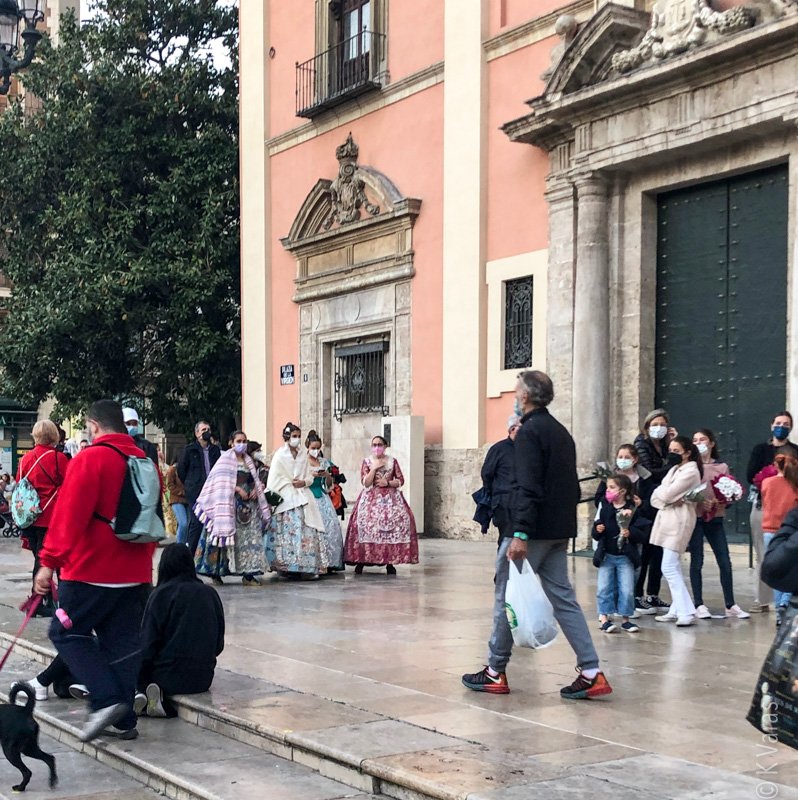
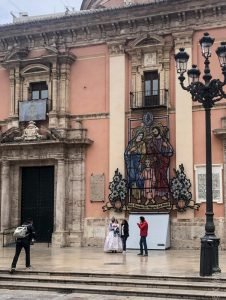
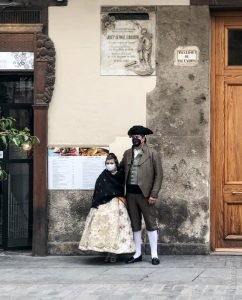
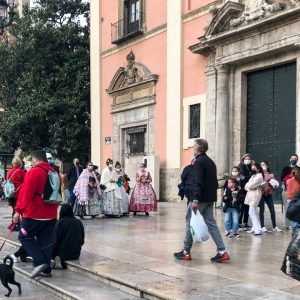
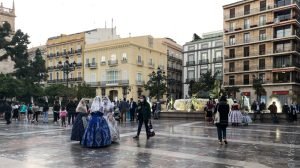
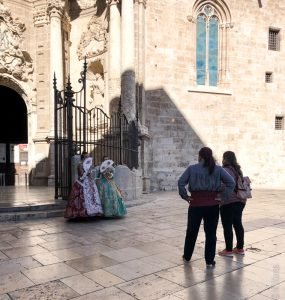
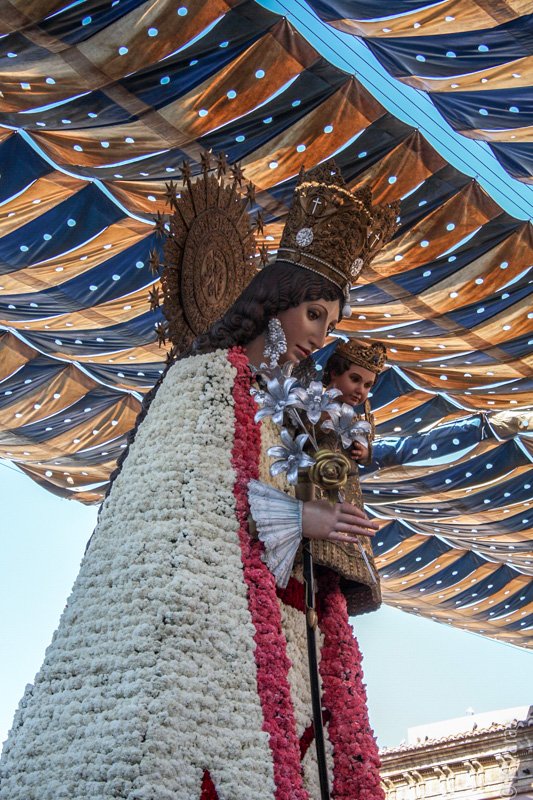
There was one thing I managed to document, at least a little bit. As part of the Fallas, the various neighbourhoods put on parades and the one constant during the parades are the folks dressed in the traditional clothes of the falleros and falleras. They may not have been able to burn anything this year but Covid didn’t stop them from putting on their best and strutting around the city. One of the things they do is visit the Basílica de la Mare de Déu dels Desemparats, right around the corner from the house. I’m not sure what happens inside but I saw long lineups to get in, with most of the people waiting dressed in traditional costumes. It is where the massive statue of Our Lady of the Forsaken resides and is taken out for the offering of the flowers during the Fallas. There are so many traditions surrounding this festival, it will take me much time to figure them out, I’m sure. Here again is a photo of her I took back in 2011 when I visited the city one day too late to partake in the festivities.
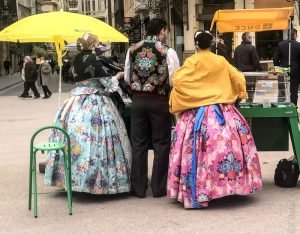
I did take as many photos of the falleras as I could without looking like a stalker. Now it makes sense what all those traditional dresses in store windows were!